
Straighter teeth do more than improve your smile. Well-aligned teeth are easier to clean, which lowers the risk of cavities and gum problems, and they can make chewing more comfortable. If you're considering treatment in Dubai, the main decision is usually between traditional braces and clear aligners such as Invisalign. Both work, but they suit different people.
How each option works
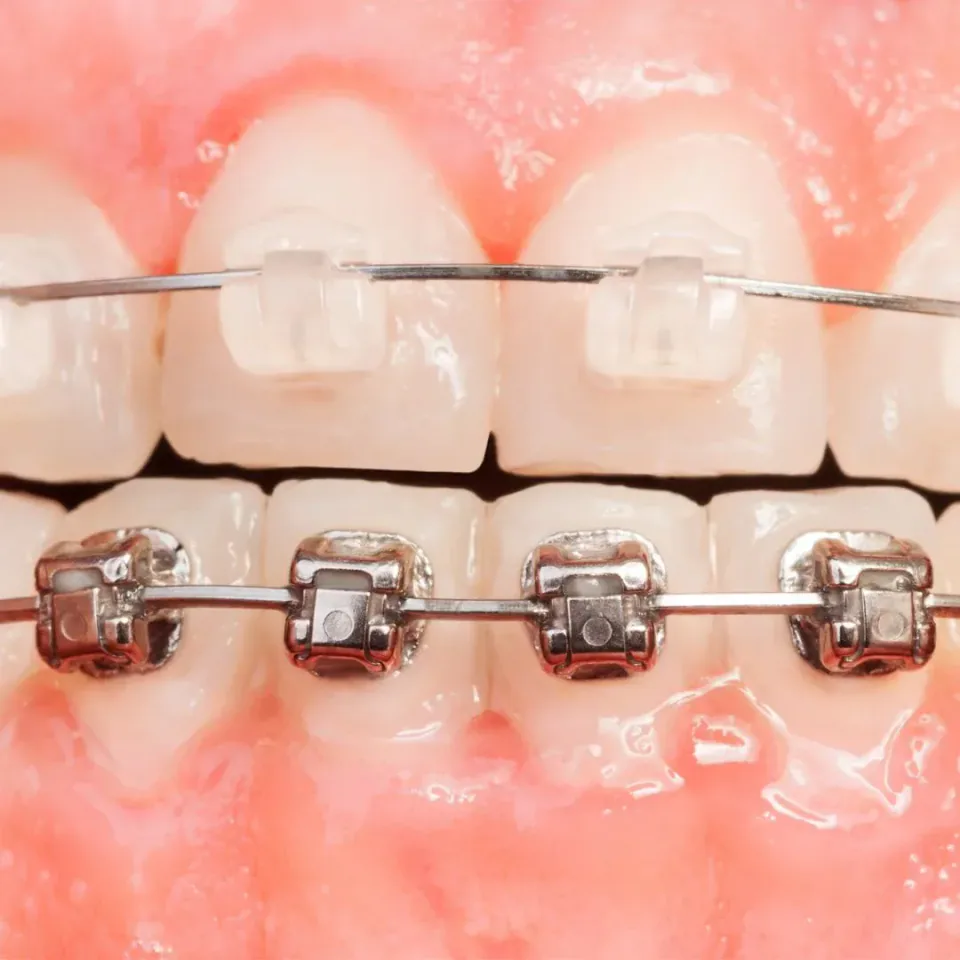
Traditional braces use brackets attached to the teeth and connected by a wire. The orthodontist adjusts the wire at regular visits to move teeth gradually into position. Several types are available:
- Metal braces: the classic option, strong and effective for most cases
- Ceramic braces: tooth coloured brackets that are less noticeable
- Self ligating braces: brackets with a built in clip instead of elastic bands, which can mean fewer adjustments
Clear aligners are a series of transparent, custom made trays. You wear each set for a set period, then move to the next, and each set shifts your teeth slightly. You take them out to eat, drink and brush.
Key differences
Appearance. Aligners are nearly invisible, which appeals to many adults and professionals. Metal braces are visible, and ceramic braces are a middle option.
Comfort. Both can cause soreness for a few days after a new adjustment or a new set of trays. Braces can irritate the cheeks and lips, while aligners have no brackets or wires.
Eating and cleaning. With braces, you need to avoid very hard, sticky or chewy foods, and you have to clean carefully around brackets. With aligners, you remove them for meals, so you can eat normally, but you must brush before putting them back.
Discipline. Aligners only work if they are worn about 20 to 22 hours a day. If you tend to forget or leave them out, braces may be the safer choice because they can't be removed.
Complex cases. Braces can handle a wider range of problems, including severe crowding, significant bite problems and complicated tooth movements. Aligners handle many mild to moderate cases well, but they may not be suitable for every situation.
Treatment time. Duration depends on your teeth, not just the method. Many treatments run from several months to a couple of years, and only an examination can give a realistic estimate.
Which one is right for you?

Braces may suit you if:
- You have a complex bite or severe crowding
- You want a solution that doesn't depend on daily discipline
- The patient is a child or teenager who may lose or forget removable trays
Clear aligners may suit you if:
- Your case is mild to moderate
- Appearance matters a lot to you
- You can commit to wearing them almost all day
- You want to remove them for meals and cleaning
What happens at a first consultation
A good orthodontic assessment typically includes a check of your teeth, gums and bite, digital scans or X rays, and a discussion of your goals. Your dentist should explain the options, the expected timeline and what the treatment involves. Be wary of anyone who promises specific results before examining you.
After treatment: retainers matter
Teeth tend to drift back after treatment, so wearing a retainer as advised is essential. Skipping this step is one of the most common reasons results are lost.
Questions to ask your orthodontist
- Which option do you recommend for my case, and why?
- How long will treatment take, and how often are visits?
- What is the total cost, including retainers?
- What happens if I need adjustments or refinements?
The best choice depends on your teeth, your lifestyle and your goals, so a personal assessment matters more than any general guide.
About the author / clinic
Dentism Dental Polyclinic JLT offers orthodontic care for adults and children in Jumeirah Lakes Towers, Dubai, including clear aligners, metal, ceramic and self ligating braces, and bite and crowding correction.
Podium Level, Lakepoint Tower, Unit R4-C, Cluster N, Al Thanyah Fifth, JLT, Dubai
+971 4 834 7382 | WhatsApp: +971 50 324 7382
###